bond035 30 September 2023, 16:09
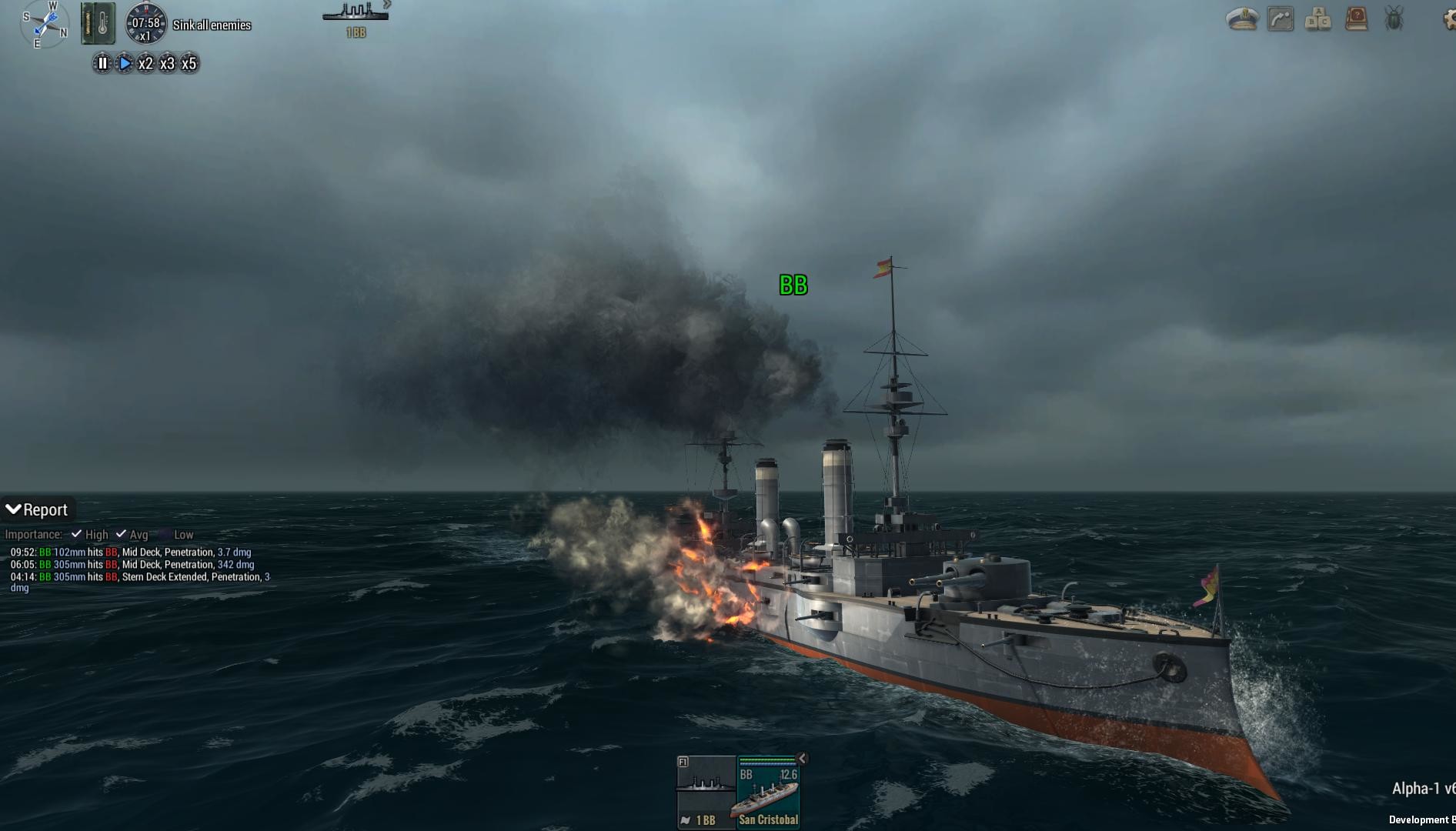
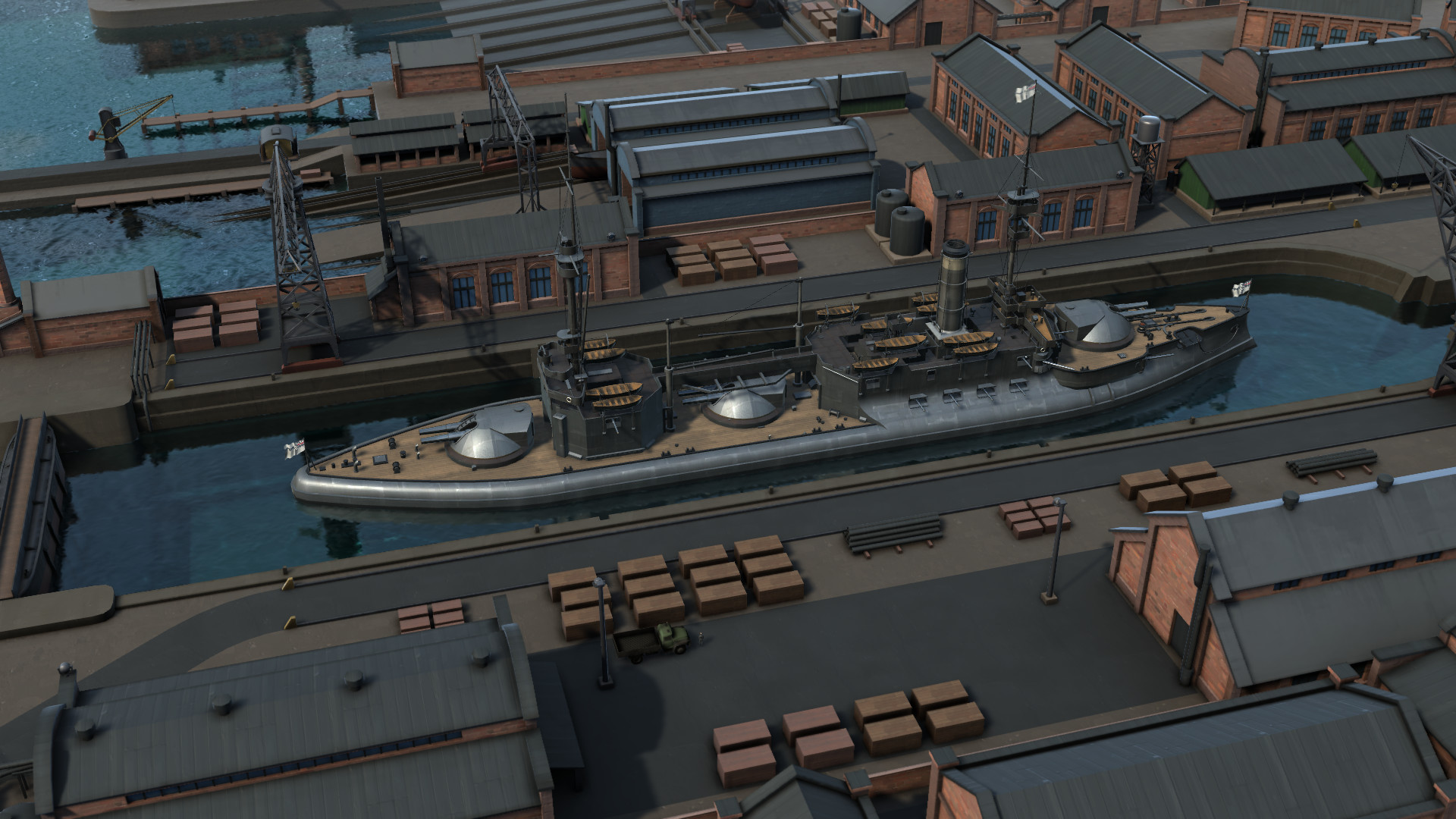
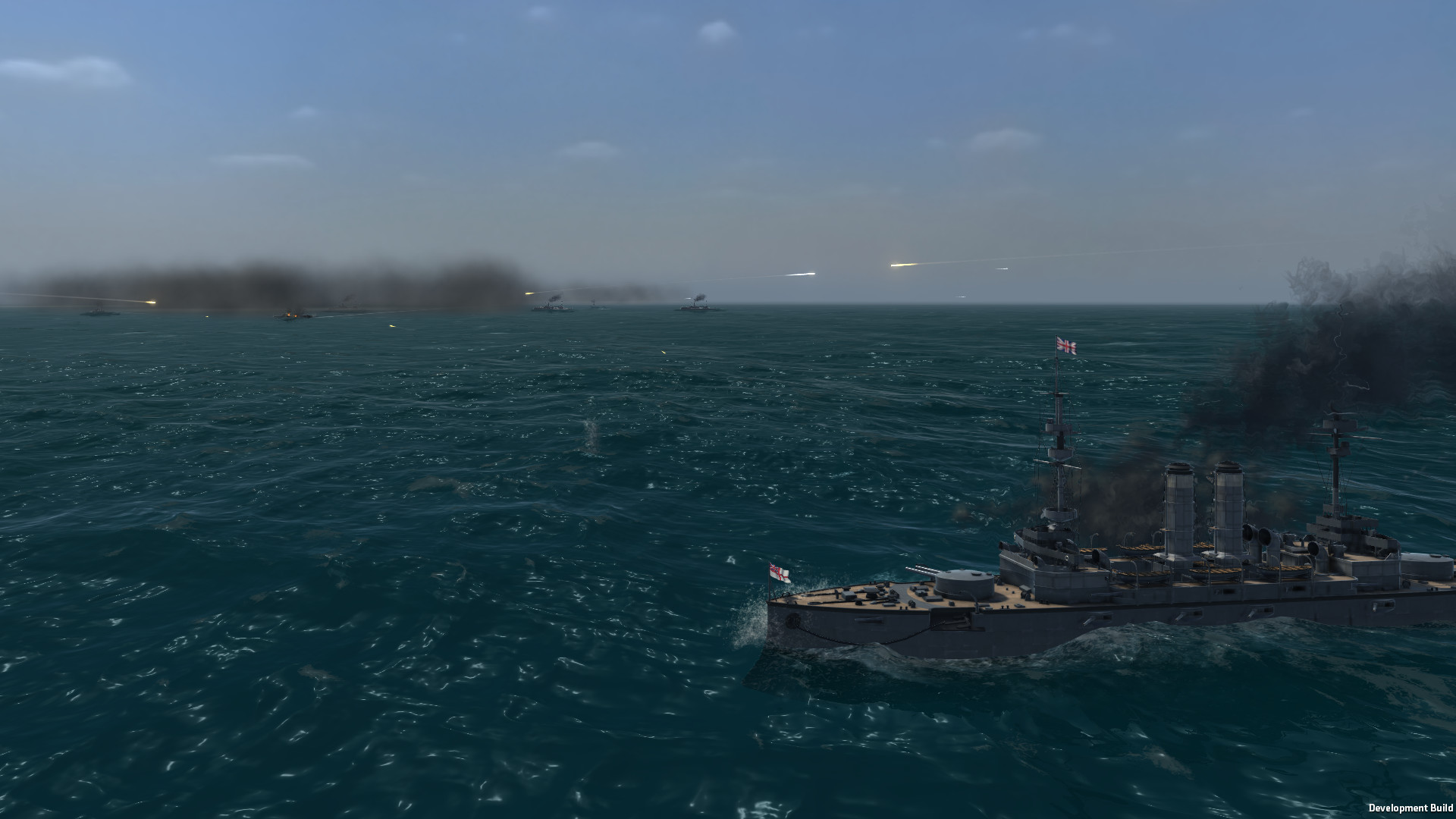
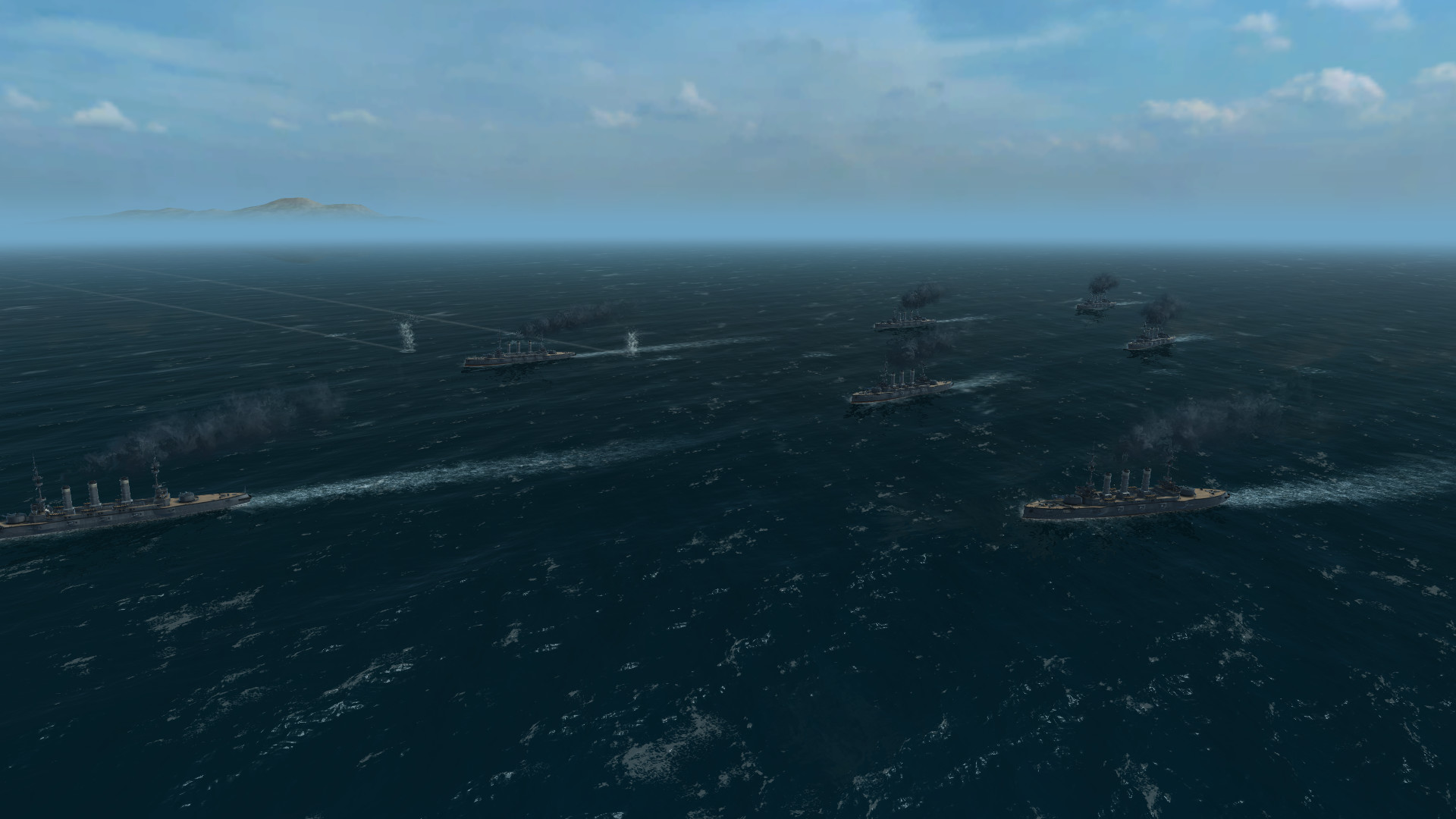
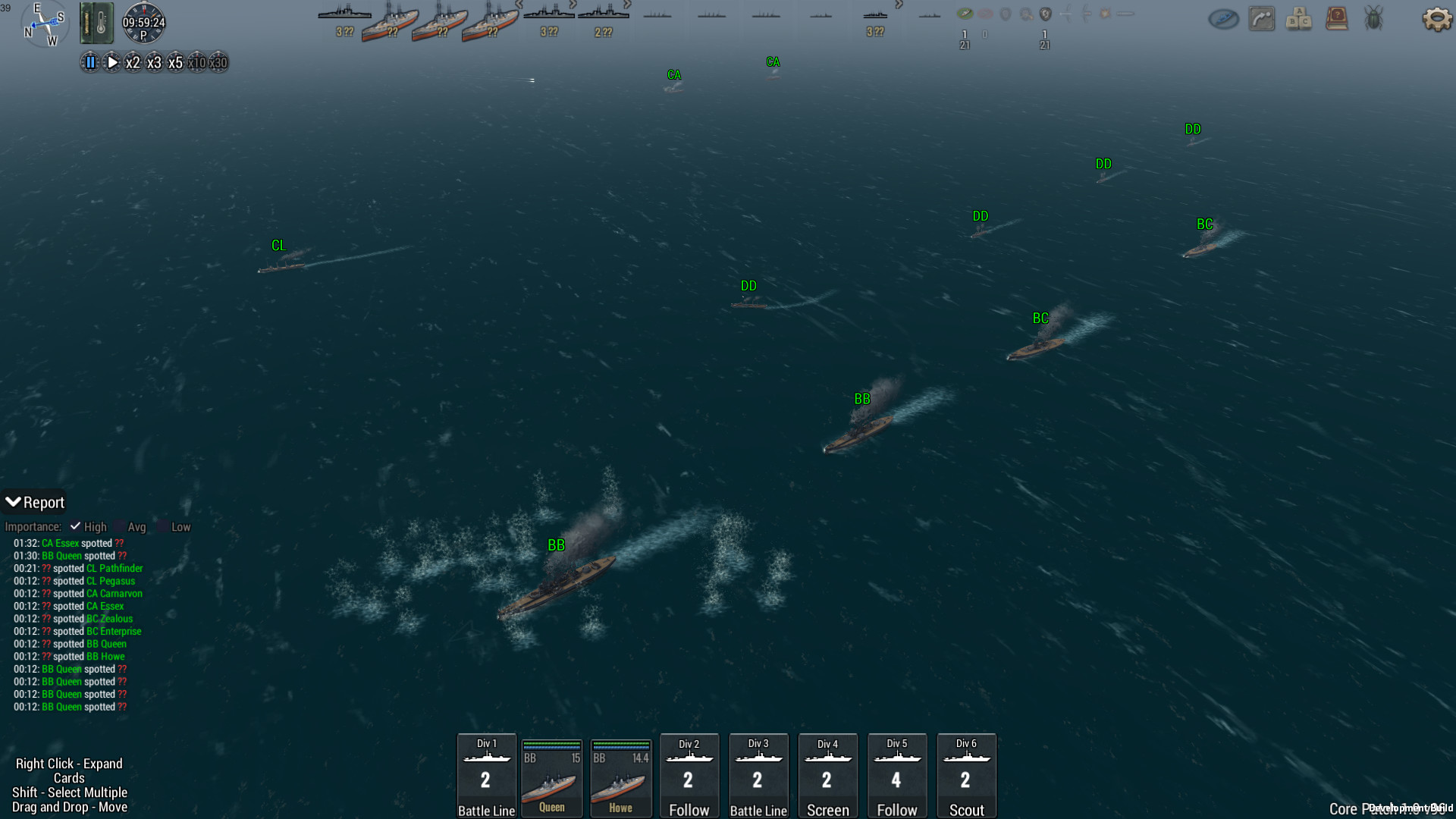
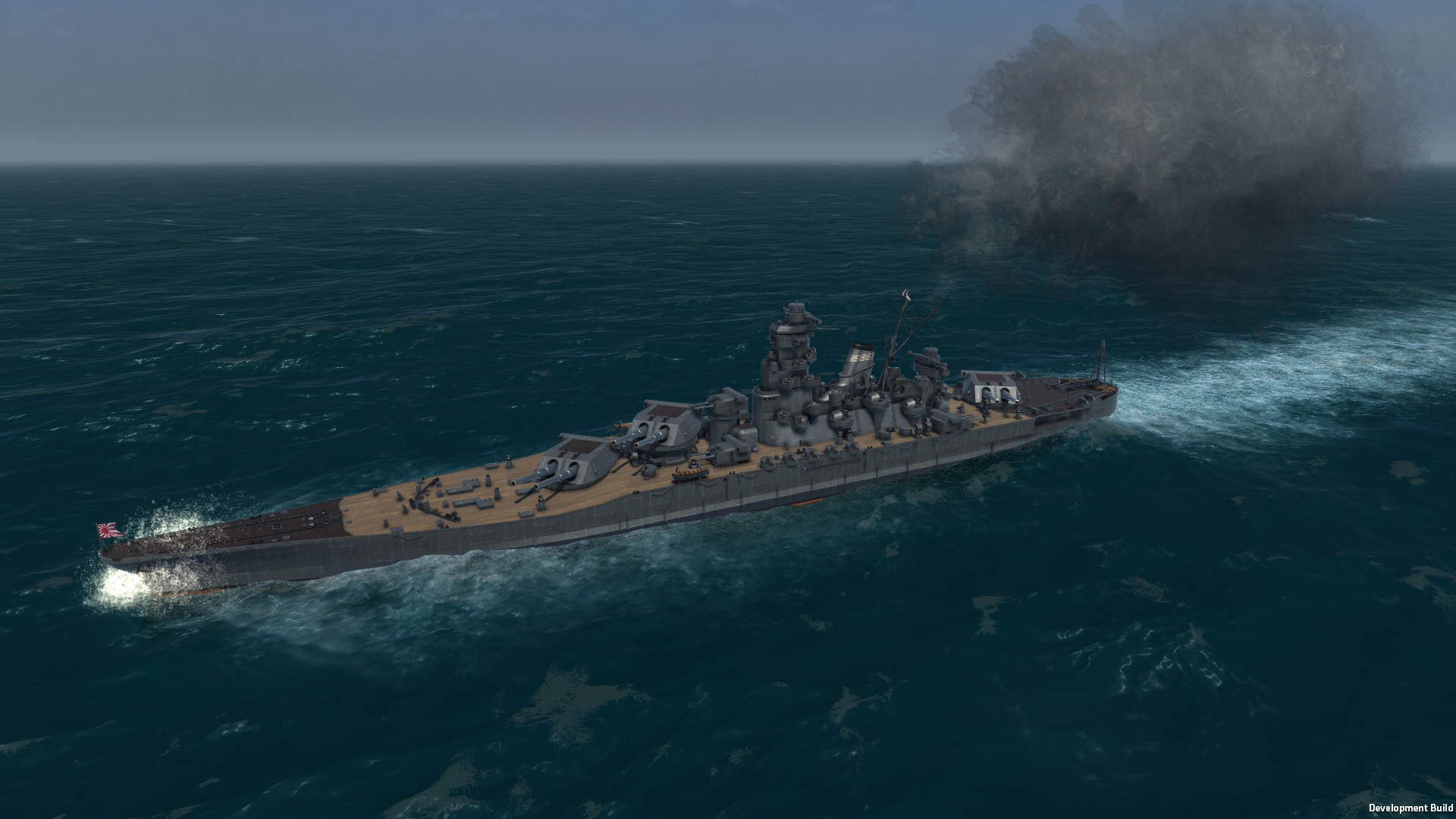
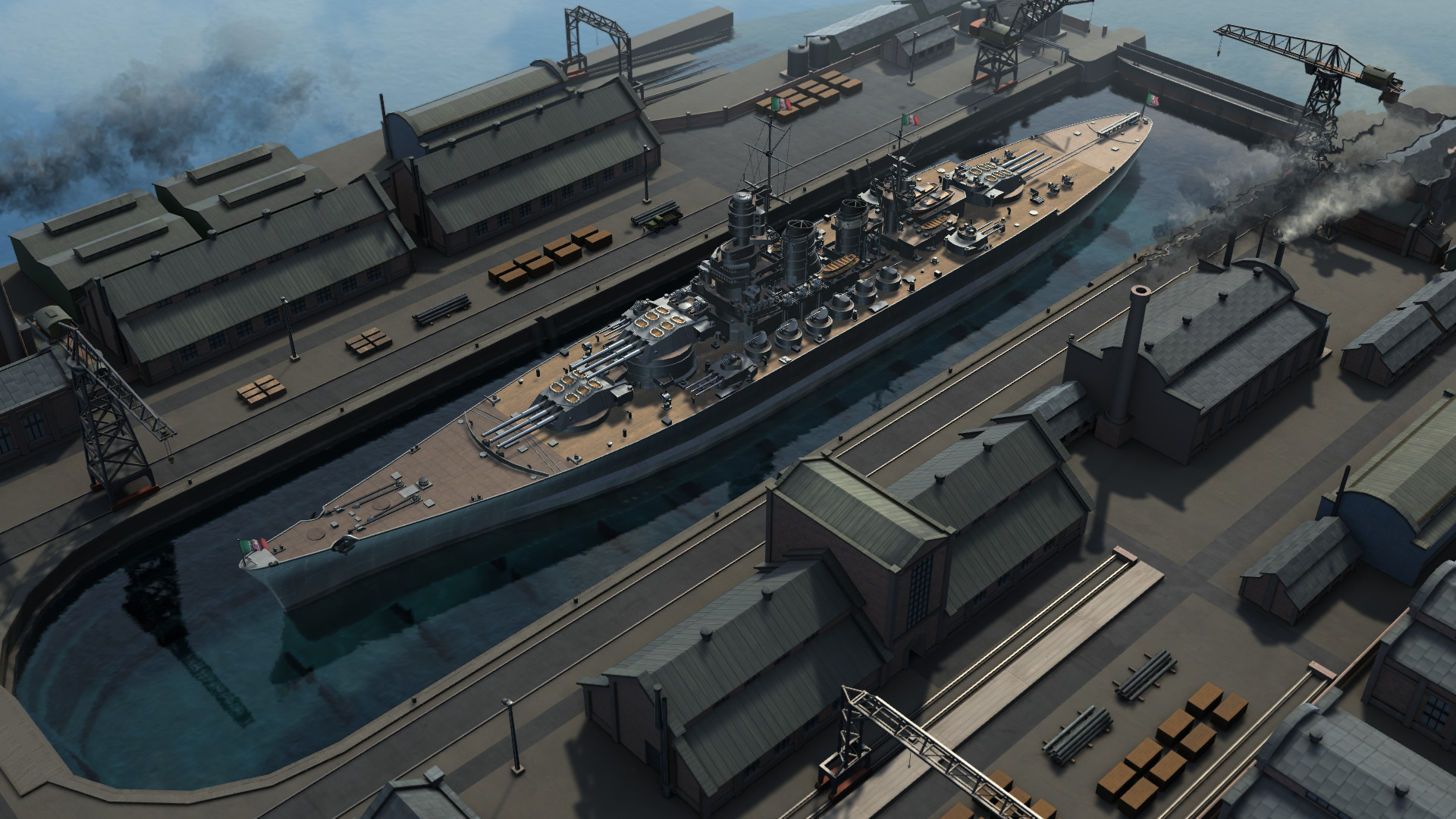
То, как сейчас выглядят бои меня в целом устраивает. Контента в плане корпусов маловато, но это наживное.
Только что накидали кучу ранней копипасты.
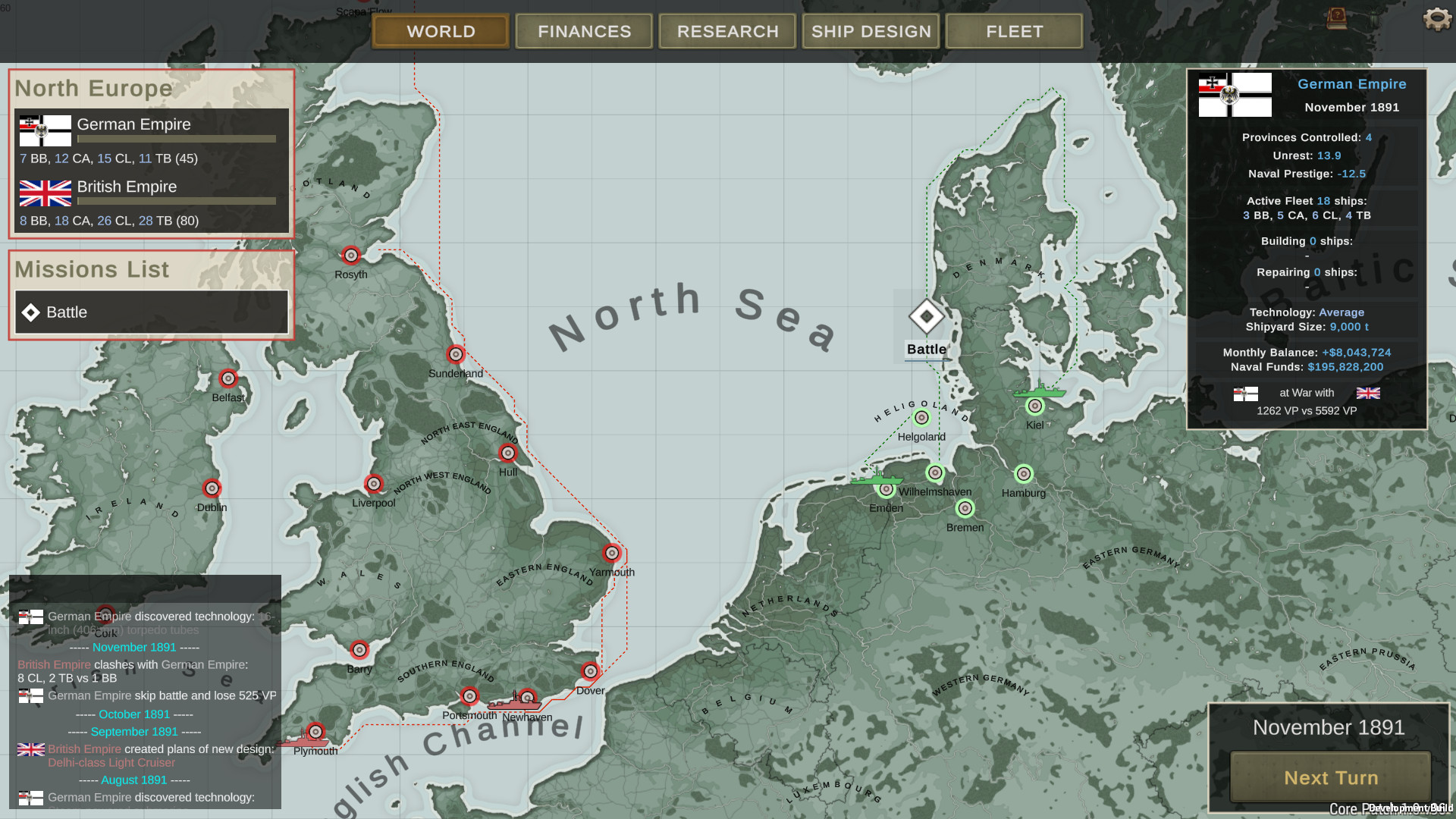
*BETA Major Update v1.4*
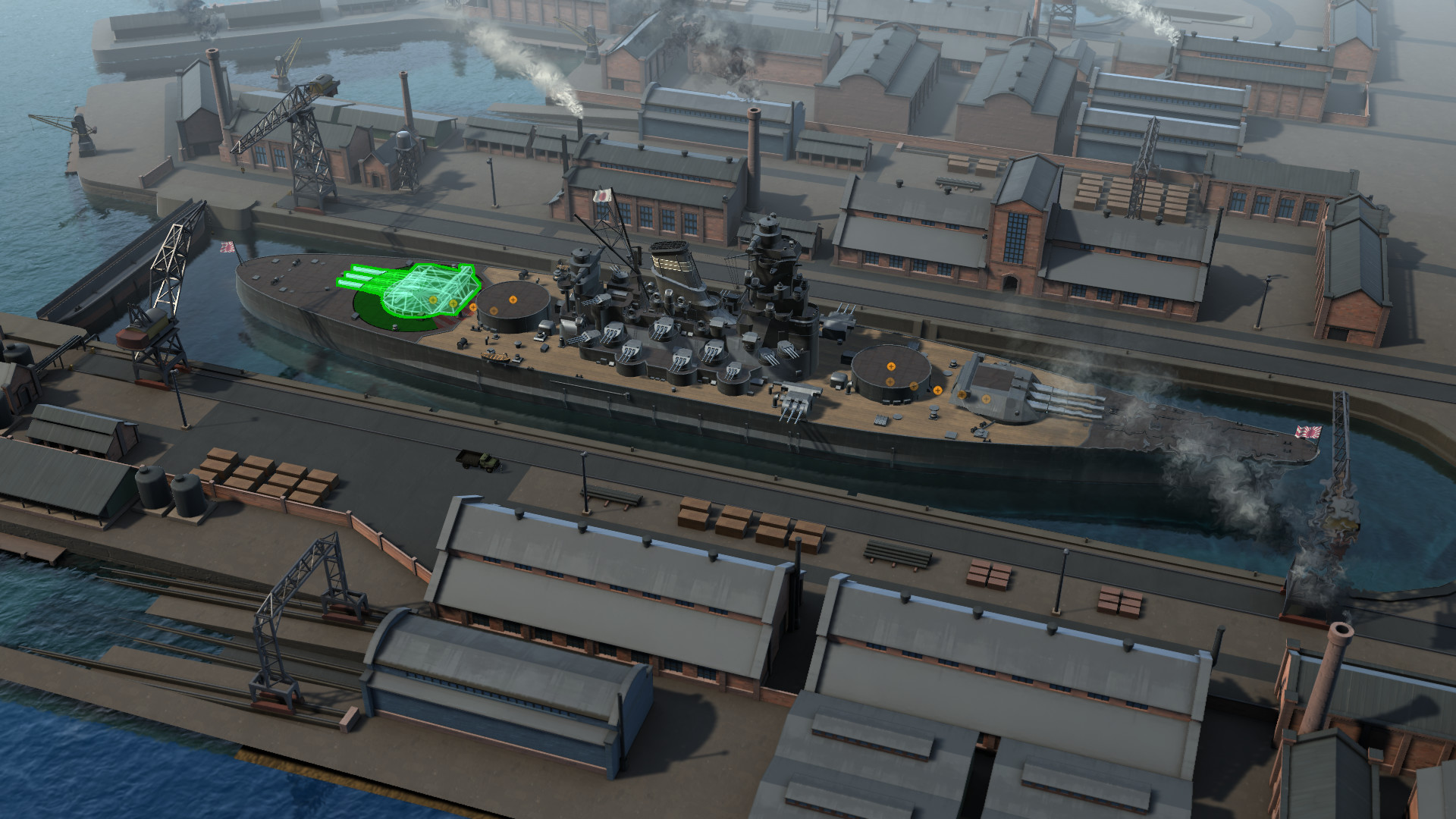
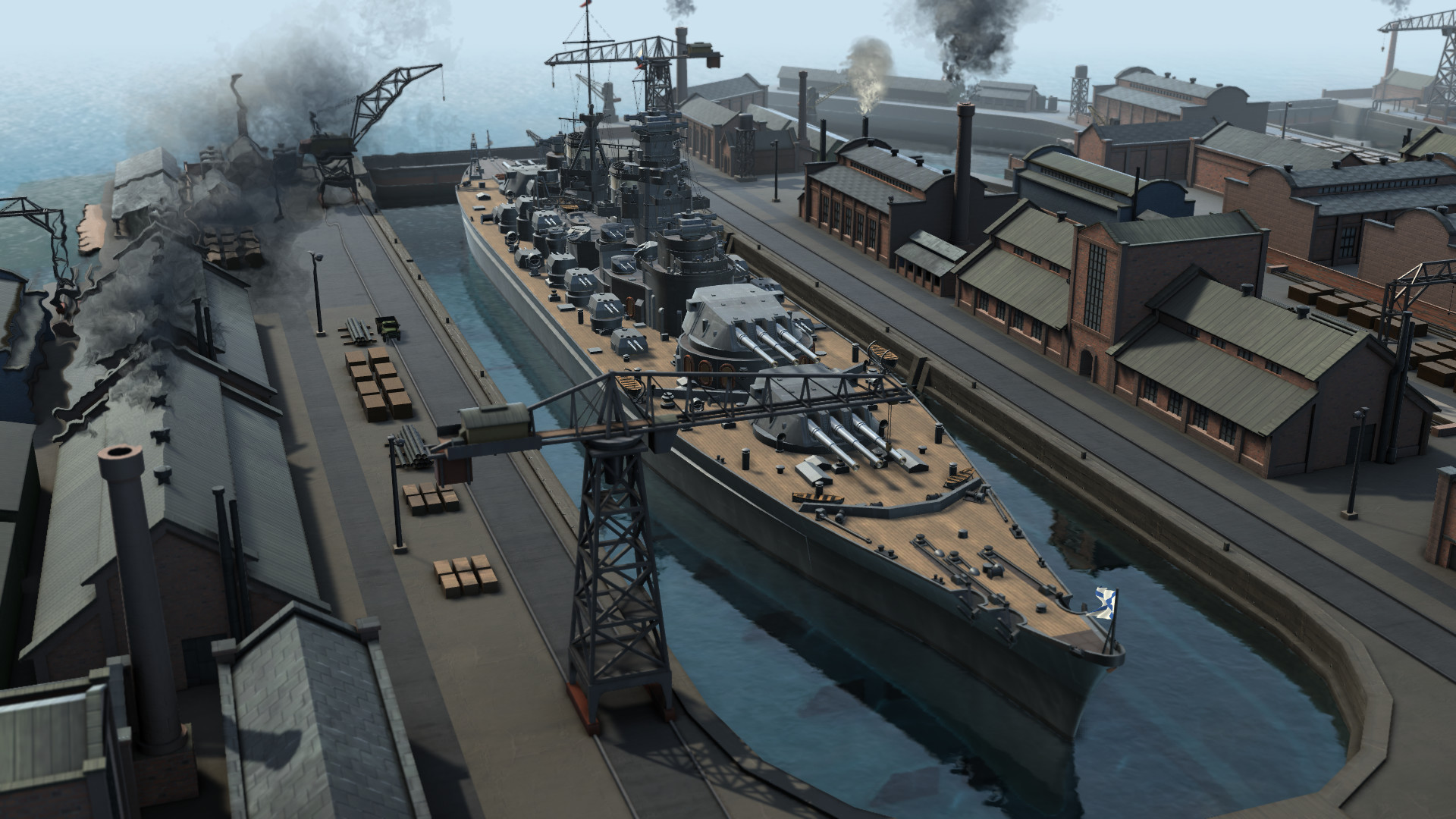
*74+ NEW HULLS*
German “Hybrid Battleship” which can resemble the Scharnhorst-class with more accuracy. It is a hull available from 1935 and has a displacement between 38,000 and 52,500 tons.
British “Large Light Cruiser”' which resembles the Courageous-class. It can be found in the battlecruiser hulls from 1916 to 1929 and has a displacement between 18,250 and 21,000 tons.
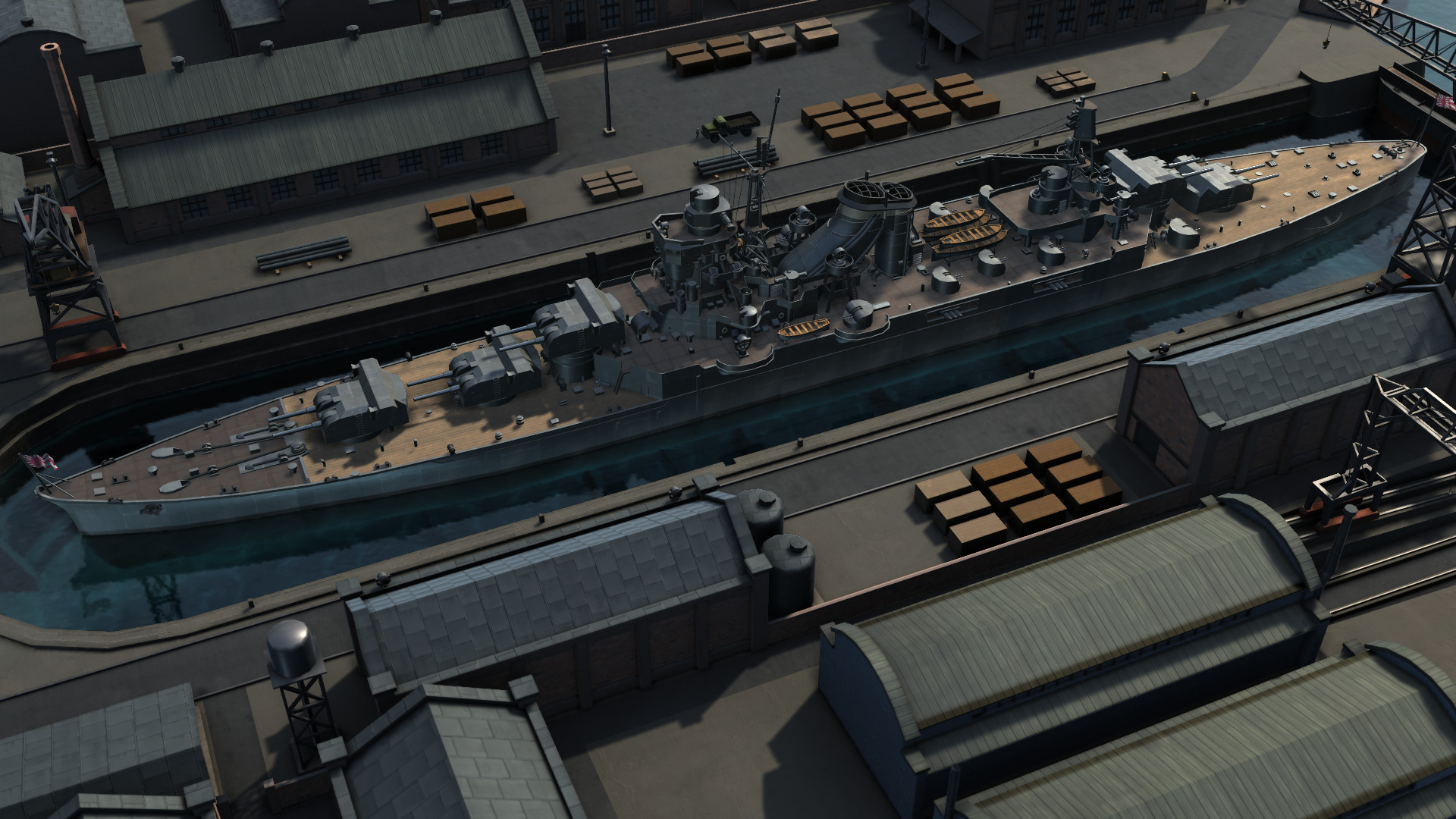
British “Command Cruiser”, a hull with exceptional characteristics and ship parts, suitable for creating ships with superior accuracy. It is found in the heavy cruiser hulls after 1939 and has a displacement between 14,750 and 17,500 tons.
British “Experimental Heavy Cruiser”, a hull that aims to build cruisers of high firepower and survivability but not particularly fast. It is available for Britain from 1939 and has a displacement between 17,500 and 19,750 tons.
Austro-Hungarian “Heavy Scout Cruiser” is a hull that can create durable and fast heavy cruisers, strong for medium distance fights. It is available in the heavy cruiser hulls after 1935 and has a displacement between 10,900 and 16,550 tons.
German “Modern Heavy Cruiser III”, a hull that can replicate the Admiral-Hipper class more closely. It is available after 1933 and has a displacement between 10,900 and 16,550 tons.
British “Modern Heavy Cruiser I”, a cost-effective new heavy cruiser which resembles British historical cruisers of the time. It is available from 1926 and has a displacement between 9,000 and 13,500 tons.
British “Compact Heavy Cruiser”, another cost-effective heavy cruiser available from 1926 with a displacement between 8,000 and 10,500 tons.
US “Heavy Cruiser II”, a hull quite similar to the Northampton-class. It is available from 1922 and has a displacement between 13,300 and 15,000 tons.
French “Heavy Cruiser I” a speculative French cruiser of the interwar period, which is available from 1917 and has a displacement between 11,900 and 14,300 tons.
Austro-Hungarian “Experimental Heavy Cruiser” a speculative, rather bulky, cruiser of the interwar period, which is available from 1917 and has a displacement between 11,500 and 14,250 tons.
Russian “Experimental Heavy Cruiser” a speculative cruiser of the interwar period, quite durable but slow, which is available from 1917 and has a displacement between 11,800 and 14,850 tons.
Japanese “Experimental Heavy Cruiser” a speculative cruiser of the interwar period, an agile and versatile ship, which is available from 1917 and has a displacement between 7,400 and 12,000 tons.
Chinese “Experimental Heavy Cruiser” a speculative cruiser of the interwar period, which is rather small for its role but also cost-effective. It is available from 1917 and has a displacement between 7,500 and 9,500 tons.
Spanish “Experimental Heavy Cruiser” a speculative cruiser of the interwar period, which can make useful cruisers for overseas patrol duty. It is available from 1917 and has a displacement between 7,300 and 11,200 tons.
German “Heavy Cruiser” a speculative cruiser of the interwar period, which could be a bigger version of the historical German Light Cruisers of the time. It is available from 1917 and has a displacement between 9,000 and 11,250 tons.
British “Heavy Cruiser II” a speculative cruiser of the interwar period, which resembles the County-class. It is available from 1922 and has a displacement between 11,250 and 13,500 tons.
British “Heavy Cruiser I” a speculative cruiser of the interwar period, which resembles the Hawkins-class. It is available from 1917 to 1928 and has a displacement between 10,250 and 12,500 tons.
Compact “Heavy Cruiser ” for Spain and China is a cruiser of small size that can host large guns, useful for nations with a small budget. It is available from 1922 and has a displacement between 8,500 and 9,500 tons.
Italian “Experimental Heavy Cruiser” tis an advanced hull for its time, offering very fast and stealthy cruisers which, however are not well armored. This cruiser which is based on the early Condottieri-class cruisers is available from 1917 and has a displacement between 8,900 and 12,000 tons.
French “Armored Cruiser V” the culmination of French heavily armored cruisers. It is available from 1917 to 1925 and has a displacement between 7,500 and 13,700 tons.
Russian “Large Armored Cruiser II” a large hull able to produce cruisers similar to the second Rurik-class. It is available from 1909 to 1925 and has a displacement between 14,500 and 17,800 tons.
German “Armored Cruiser III” a clear upgrade to the previous version and with capabilities similar to SMS Scharnhorst. It is available from 1900 to 1917 and has a displacement between 11,700 and 14,500 tons.
British “Advanced Escort Cruiser I” replacing the hull which had the same name which got upgraded on a higher titer, it can offer robust cruiser designs for all purposes. It is available from 1935 and has a displacement between 12,500 and 14,500 tons.
German “Modern Light Cruiser II”is a hull that can offer designs similar to the Nurnberg-class but more powerful. It is available from 1935 and has a displacement between 11,200 and 13,950 tons.
British “Modern Light Cruiser II” is a hull that can offer designs similar to the Town-class. It is available from 1925 and has a displacement between 8,550 and 13,500 tons.
British “Advanced Scout Cruiser” is a hull which can recreate the Dido-class with much detail. It is available from 1935 and has a displacement between 6,950 and 7,980 tons.
British “Light Cruiser VI” is a hull which offers designs similar to the British Cruisers of the C-Class and its larger variants. It is available from 1917 and has a displacement between 6,900 and 11,500 tons.
British “Light Cruiser V” is a hull which offers designs similar to the British Cruisers of the first Arethusa-Class and its larger variants. It is available from 1917 to 1925 and has a displacement between 6,100 and 10,500 tons.
Spanish “Light Cruiser IV” offers speculative cost-effective cruiser designs that can last for many years. It is available from 1917 and has a displacement between 5,300 and 9,200 tons.
Chinese “Light Cruiser V” offers speculative cost-effective cruiser designs that can serve for many years. It is available from 1917 and has a displacement between 5,500 and 7,500 tons.
Italian “Experimental Light Cruiser” is a special, very advanced hull for its time, which can offer designs similar to the early Condottieri-class. It is available from 1917 and has a displacement between 7,200 and 10,000 tons.
Russian “Light Cruiser V” is a hull quite similar to the Admiral Nakhimov-class. It is available from 1917 and has a displacement between 6,500 and 9,200 tons.
German “Light Cruiser V” is a hull fairly similar to the post war Emden-class. It is available from 1917 to 1935 and has a displacement between 7,000 and 9,250 tons.
French “Light Cruiser V” is a hull based on the La Motte-Picquet-class and Duguay-Trouin-class designs. It is available from 1917 and has a displacement between 8,500 and 9,500 tons.
Japanese “Light Cruiser IV” is a hull based on the Kuma-class and Nagara-class designs. It is available from 1917 and has a displacement between 5,400 and 10,000 tons.
German “Scout Cruiser” is a speculative hull that can offer fast and robust light cruisers. It is available from 1917 and has a displacement between 4,500 and 7,250 tons.
US “Large Scout Cruiser” is a hull quite similar to the Omaha-class. It is available from 1917 and has a displacement between 9,700 and 13,500 tons.
British “Scout Cruiser” is a hull looking similar to the various British scout cruiser designs of the first World War. It is available from 1910 to 1925 and has a displacement between 4,500 and 8,500 tons.
Russian “Semi-Armored Cruiser V” is a speculative hull that offers large, well protected but slow light cruisers. It is available from 1915 to 1925 and has a displacement between 5,500 and 11,500 tons.
“Semi-Armored Cruiser IV” for China and Spain is a speculative hull that offers large, well protected but slow light cruisers. It is available from 1915 to 1925 and has a displacement between 5,000 and 11,000 tons.
Austro-Hungarian “Semi-Armored Cruiser III” is a speculative hull that offers large, well protected but slow light cruisers. It is available from 1915 to 1925 and has a displacement between 6,900 and 12,900 tons.
French “Semi-Armored Cruiser V” is a speculative hull that offers large, well protected but slow light cruisers. It is available from 1915 to 1925 and has a displacement between 6,000 and 12,200 tons.
“Small Scout Cruiser” for Austria-Hungary, China and Spain offers stealthy and very small light cruisers. It is available from 1915 to 1925 and has a displacement between 3,000 and 5,800 tons.
“Russian Experimental Scout Cruiser” is a unique hull which offers very fast cruisers for its tech time. It is, available from 1894 to 1905 and has a displacement between 3,200 and 4,200 tons.
“US 3-Mast Armored Cruiser” is an early technology hull resembling outdated cruisers of the time which, though, had extreme firepower. It is, available from 1890 to 1905 and has a displacement between 3,700 and 7,200 tons.
“Russian 3-Mast Armored Cruiser” an aged but robust hull design, similar to the one used in various Russian cruisers of the time. It is, available from 1890 to 1907 and has a displacement between 3,750 and 13,200 tons.
“Experimental 3-Mast Cruiser” for Russia is a cost-effective early cruiser, available from 1890 to 1902 and has a displacement between 2,000 and 3,500 tons.
“Experimental 3-Mast Cruiser” for China and Spain is a cost-effective early cruiser, available from 1890 to 1902 and has a displacement between 1,800 and 3,300 tons.
“Experimental 3-Mast Cruiser” for France is a cost-effective early cruiser, available from 1890 to 1902 and has a displacement between 2,100 and 3,600 tons.
“Standard 3-Mast Cruiser” for USA resembling the various outdated 3-mast cruisers used by the USA in the late 19th century and early 20th century. It is available from 1890 to 1902 and has a displacement between 1,750 and 5,200 tons.
“Standard 3-Mast Cruiser” for Russia, France, Spain, China an aged but practical hull design resembling the various 3-mast cruisers used by many nations in the late 19th century and early 20th century. It is available from 1890 to 1902 and has a displacement between 2,750 and 6,700 tons.
Italian “Armored Cruiser III”* a cruiser quite similar with the “Giuseppe Garibaldi-class”. It is available from 1890 to 1905 and has a displacement between 6,000 and 7,500 tons.
“Small Armored Cruiser” for Japan and Spain is a smaller variant similar to “Giuseppe Garibaldi-class”. It is available from 1890 to 1905 and has a displacement between 6,200 and 7,700 tons.
“Small Armored Cruiser” for Japan and Spain is a smaller variant similar to “Giuseppe Garibaldi-class”. It is available from 1890 to 1905 and has a displacement between 6,200 and 7,700 tons.
Japanese “Hybrid Light Cruiser” offers a unique type of cruiser which has the size of an early light cruiser but can carry huge guns in relation to its size, like the Naniwa-class and its variants. It is available from 1890 to 1905 and has a displacement between 2,900 and 4,100 tons.
“Hybrid Light Cruiser” for Austria-Hungary and China is a type of cruiser which has the size of an early light cruiser but can carry huge guns in relation to its size, similar to some early Austro-Hungarian cruisers. It is available from 1890 to 1905 and has a displacement between 2,950 and 4,250 tons.
Japanese “Belted 3-Mast Cruiser” is an especially durable hull for a light cruiser that can host many small guns, quite similar with the Chiyoda class. It is available from 1890 to 1905 and has a displacement between 2,250 and 5,000 tons.
Austro-Hungarian “Belted Cruiser” is a durable cruiser hull that can be something between an armored cruiser and a light cruiser. It is available from 1890 to 1915 and has a displacement between 2,750 and 5,500 tons.
Austro-Hungarian “Heavy Torpedo Cruiser” is a rather small hull but is very durable and can make small and effective ships. It is available from 1890 to 1908 and has a displacement between 1,750 and 2,850 tons.
Italian “Experimental Battleship” a bulky and large battleship for its era but with poor ship handling characteristics, similar to the Italian “Re Umberto-class”. It is available from 1890 to 1905 and has a displacement between 12,500 and 14,200 tons.
Italian “Small Battleship” resembling the first small pre-dreadnought battleships of Italy. It is available from 1890 to 1905 and has a displacement between 9,000 and 10,500 tons.
Austro-Hungarian “Battleship II” a speculative hull with a potentially powerful casemate battery. It is available from 1895 to 1905 and has a displacement between 10,500 and 13,900 tons.
British “Dreadnought V” offering a hull similar to the Orion-class with centerline guns and adjusting the total seven British Dreadnought classes in a more historical technology distribution than before. It is available from 1912 to 1927 and has a displacement between 22,700 and 31,500 tons.
Russian “Battleship VI” can offer pre-dreadnoughts of extreme firepower similar to the Peresvet-class but due to the size of the hull and the potential secondary guns it can carry, it is hard to armor it fully. It is available from 1895 to 1905 and has a displacement between 14,500 and 18,500 tons.
Italian “Battleship II” can make ships quite similar to the Regina Margherita class, ships fairly fast and durable for their time. It is available from 1895 to 1905 and has a displacement between 12,500 and 15,500 tons.
USA “Small Battleship” making hulls which resemble the early US battleships such as the Indiana-class. It is available from 1890 to 1905 and has a displacement between 9,050 and 10,700 tons.
Italian “Fast Semi-Dreadnought” is a speculative hull design which can bring improved versions of the Regina Elena class. It is available from 1899 to 1907 and has a displacement between 14,500 and 16,750 tons.
Italian “Fast Dreadnought” is a speculative hull design which can serve as a variant of an oversized Regina-Elena design, making an agile and cost effective battleship. It is available from 1905 to 1916 and has a displacement between 16,950 and 19,750 tons.
Italian “Fast Armored Cruiser” is a speculative hull offering cruisers with a gun layout somewhat similar to the Pisa-class. It is available from 1907 to 1917 and has a displacement between 9,800 and 11,900 tons.
Austro-Hungarian “Armored Cruiser IV” is a speculative armored cruiser design which is compact but is a strong hull and can host many guns of small to medium caliber. It is available from 1895 to 1917 and has a displacement between 6,200 and 8,500 tons.
German “Large Torpedo Boat II” covers a previous technology gap for Germany in small destroyers It is available from 1901 to 1918 and has a displacement between 800 and 1,100 tons.
Austro-Hungarian “Large Torpedo Boat II” covers a previous technology gap for Austria-Hungary in small destroyers It is available from 1902 to 1918 and has a displacement between 950 and 1,150 tons.
US “Flush-Deck Destroyer” a special and very durable destroyer hull available only for the USA. It is available from 1918 to 1935 and has a displacement between 1400 and 2,060 tons.
Improvements on previous hulls: Various new towers and part models for new and older ships.
MORE HULLS TO BE ADDED
В смысле, бэте уже пара неделе, но вчера еще корпусов накидали.

 t1aro
t1aro alZarif
 Dr.Schmeisser
 KhanBagatur
 gurvinek2005
 Crusader556
 Haktar
 Mady
Mady Valyrian_Legionnaire
 DinarMayor
 Corrector
 kosak4
 Farin Frostgeir